
Refurbished Phone Packaging Guide 2027
What refurbished packaging has to do
Most products need packaging for one job: get the device there in one piece. Refurbished tech needs three. The third is unique to this industry.
Fast, foolproof packing
Refurbished tech operators pack locally, across a wide range of models. Packaging has to work for any device, every time, with the fewest steps. Errors on the packing floor cost more than the packaging itself.
Signal quality to the customer, signal nothing in transit
A refurbished device is the result of serious work. Grading. Testing. Certification. If it arrives in a padded mailer or a plain brown box, none of that effort shows. The customer sees cheap before they see anything else.
That first impression is also when you ask them to trust you with their old phone. The same packaging that builds trust has to be plain enough that nobody handling it in transit knows what’s inside. Those two things are not in conflict. The right packaging does both.
Earn the return
Trade-in take-back sits at around 17% of primary sales globally. Every marketing and pricing lever has been pulled. Better quotes. Sharper prompts. Timed follow-up sequences. Despite all the effort, the trade-in figure barely moves.
So maybe it was never a marketing problem.
To sell a phone, your customer needs a box to send it in. One that fits, protects, and can be sealed and handed over without a trip into town to buy packaging. Most people don’t have one. The one box they’re guaranteed to have is the one their new phone just arrived in.
Those three jobs set the bar. What follows are the most common packaging formats currently moving through the European refurbished tech market, measured against them. Some are built for one job. Some attempt two.
Corrugated mailer box
PakThat, ColomPac CP 140 and similar
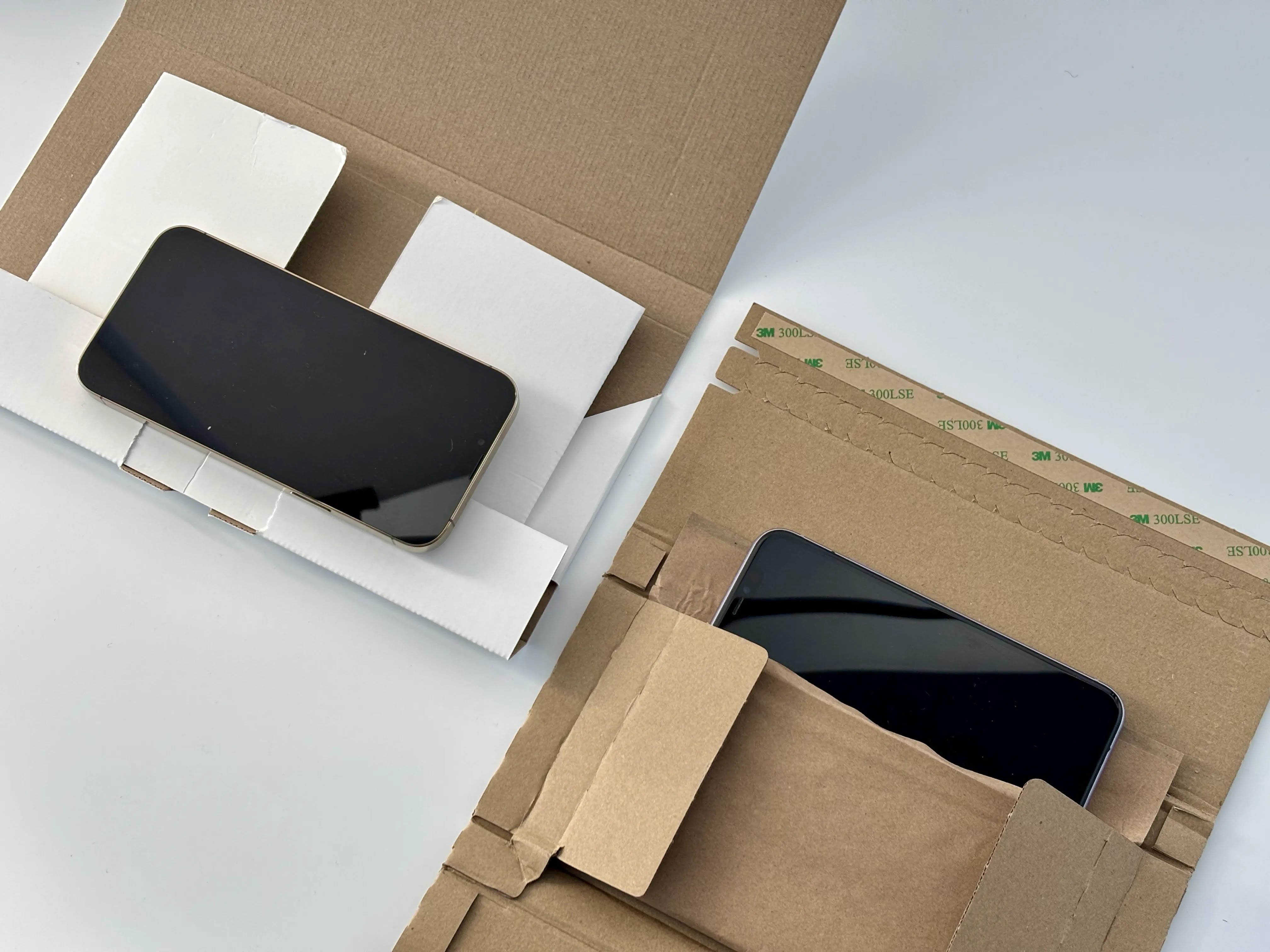
Corrugated board, EU-made, mono-material, short lead times. The most common serious format in the European market and the cheapest route to something better than a padded mailer. Two things vary: whether the box holds the device, and whether it is printed.
Job one, the pocket. PakThat and ColomPac build a paper-padded pocket into the box itself. The phone drops in, the flap folds over, the sheet turns up, a self-seal closes it. Four steps, illustrated inside the lid. It takes most smartphone sizes without model-specific variants, so the packing floor stays simple. Protection solved, one SKU, single material.
Without the pocket, nothing holds the device. It slides. It rattles. One consumer unboxing video captions exactly that, phone is loose inside the box, to an audience of thousands. A separate insert fixes it, at the cost of a second component to buy, stock, and pick, and the single-material claim goes with it.
Job two, the print. Plain brown is functional and discreet. It says nothing about the contents, to the customer or to anyone handling it in transit. Printed, every surface carries brand copy, and the box can take a tear strip that opens along a clean line, tamper-evident, no sticker needed. That is a real moment at the door. It also tells the courier what is inside.
Job three. One-way either way. The self-seal and the tear strip are both single-use closures. Neither version initiates trade-in.
On compliance. The strongest position of any format here. Single material, EU-made, no coating or lamination to separate, and the paperwork comes from a supplier already set up to provide it.
The sensible default, and the cheapest way to get protection or brand presence. Neither version attempts the return.
Retention packaging
Korrvu (plastic film) and ColomPac FT 140 (fibre-based)
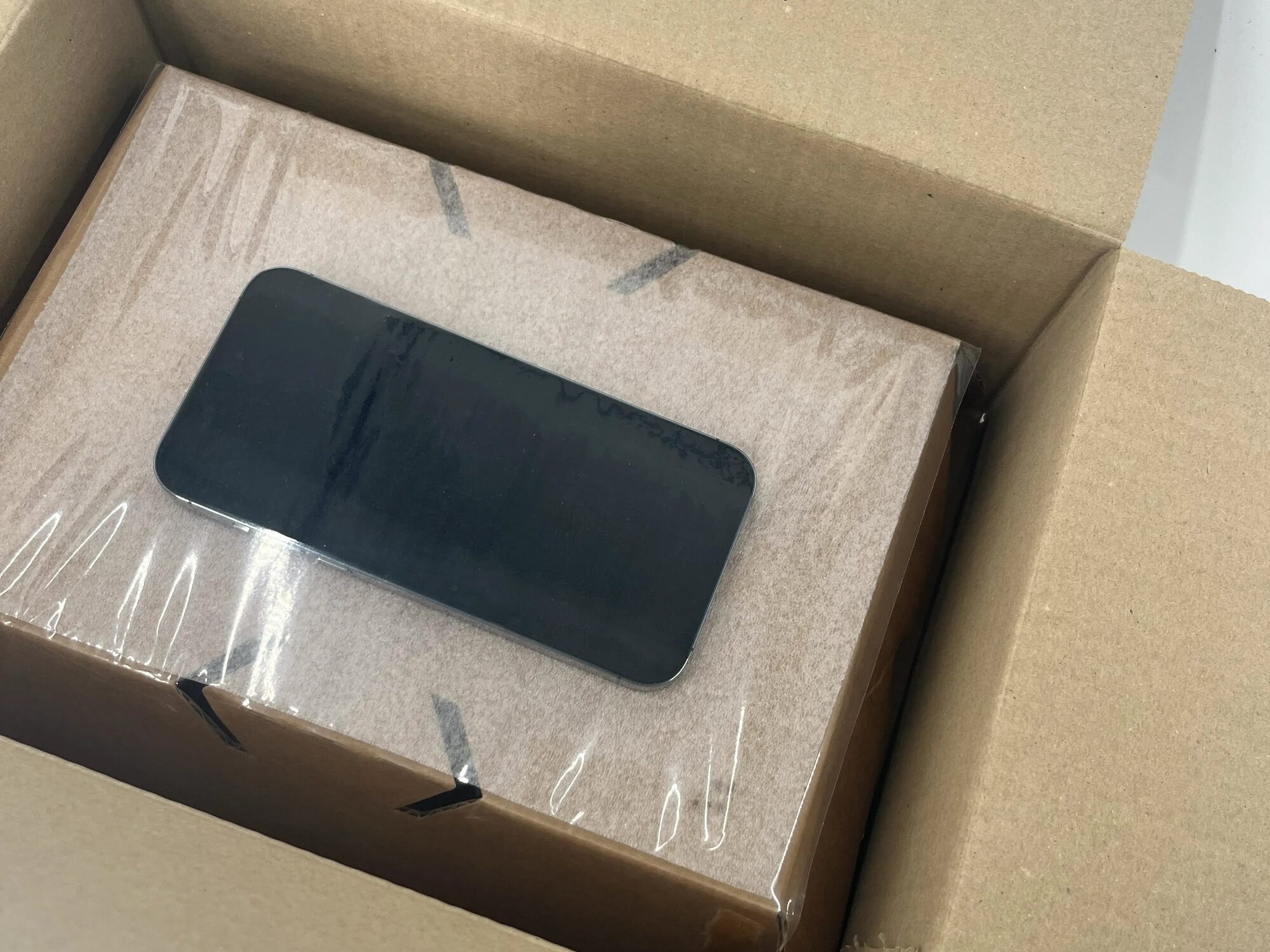
The device is suspended between a frame and a membrane, held clear of every wall. Nothing touches the phone but the film. Drop the box, and the device never meets the impact directly. This format focuses on protection, and it shows.
Job one is where it does well. It sidesteps the insert problem entirely: one retention format handles any device that fits the frame, so there is no model-specific inventory and no pick decision on the packing floor.
Job two is where it struggles. Neither version feels like a purchase. The format reads industrial, because it is. It was designed to move components between warehouses, and it still looks like that. A customer who has just paid several hundred euros for a phone unwraps something that signals logistics.
Job three. No mechanism. The film is not designed to be stretched and reset, so even a willing customer has nothing to work with.
On compliance. Korrvu is a plastic film bonded to board. Mixed materials are harder to classify and harder to prove recyclable, and the plastic is visible to the customer opening it. ColomPac states under 5% film content for its fibre-based FT 140 and recyclability in waste paper, which is a meaningfully better position, though still not a single material.
Serious protection, simple on the packing floor. Wrong fit for a consumer sale, awkward on materials, and no path back.
Two-piece rigid box
Generic OEM-style, China-sourced
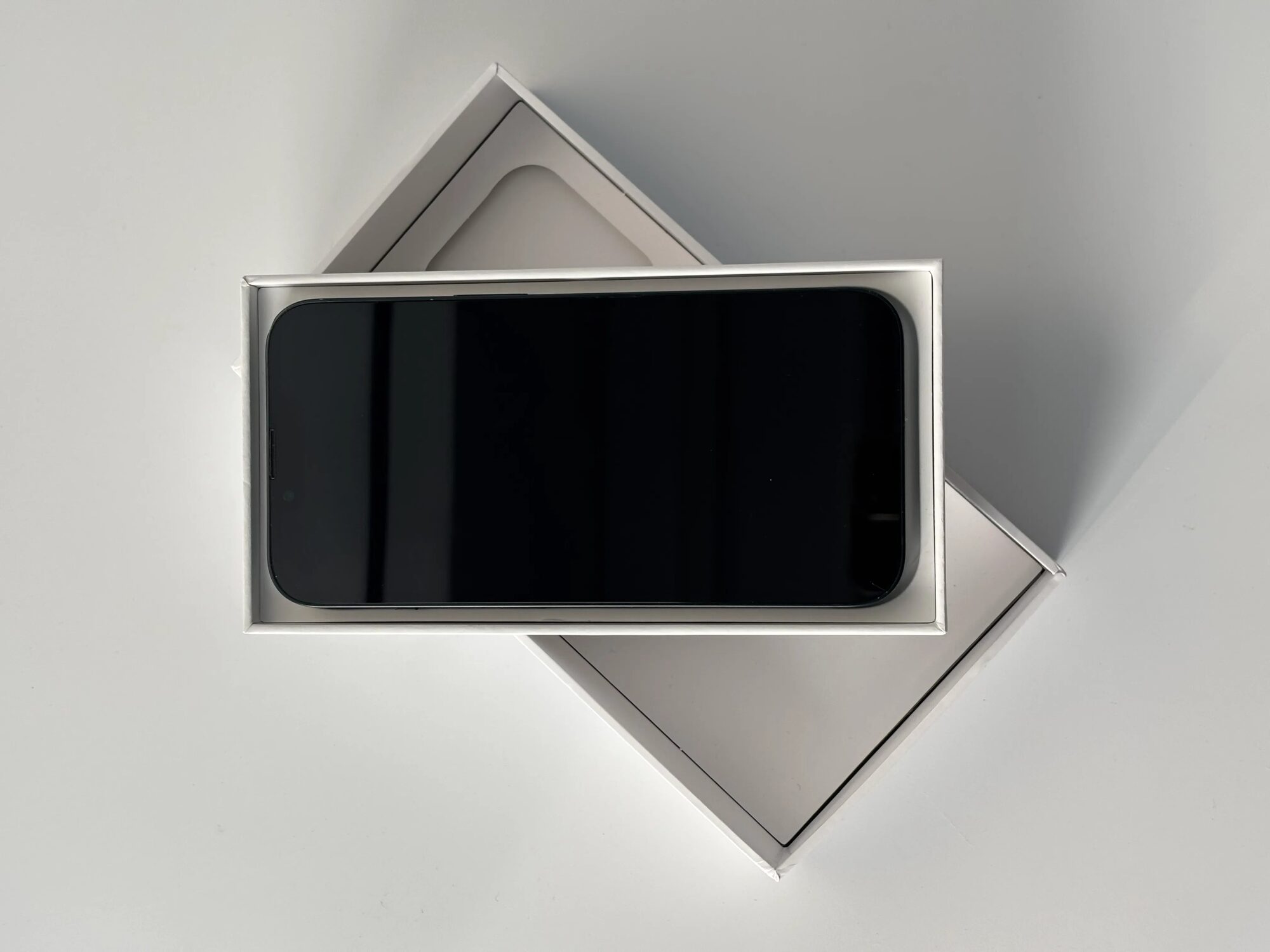
This format comes from a time when refurbished felt like a compromise. If the customer suspected they were getting something second-rate, the answer was to copy the new-device makers. Rigid box, fitted insert, lift the lid and the phone is right there. Borrow the ritual, borrow the credibility.
Job two splits. The reveal is the best thing about this format: lift the lid, the device is presented, nothing to unwrap. But the box is unmistakably a phone box. Its proportions announce the contents before anyone opens it, which is the wrong signal in transit. Strong at the door, weak on the way there.
Job one is where it gets expensive. The rigid format has no give, so every device size needs its own precisely fitting foam or plastic insert. Ten models means ten variants on the shelf, ten pick decisions, ten chances to get it wrong.
Long lead times, and it cannot ship on its own: a sticker seal for transit, an outer mailer for the journey, a packing step for each.
Job three. No mechanism. One-way by design.
On compliance. Multi-material throughout, often laminated or coated. Difficult to classify, difficult to prove recyclable. Imported from outside the EU, so the compliance file is yours to carry.
A good answer to a question the market has moved past. The variants, the lead times, and the compliance file are what it costs to keep it.
Magnetic lid box
China-sourced
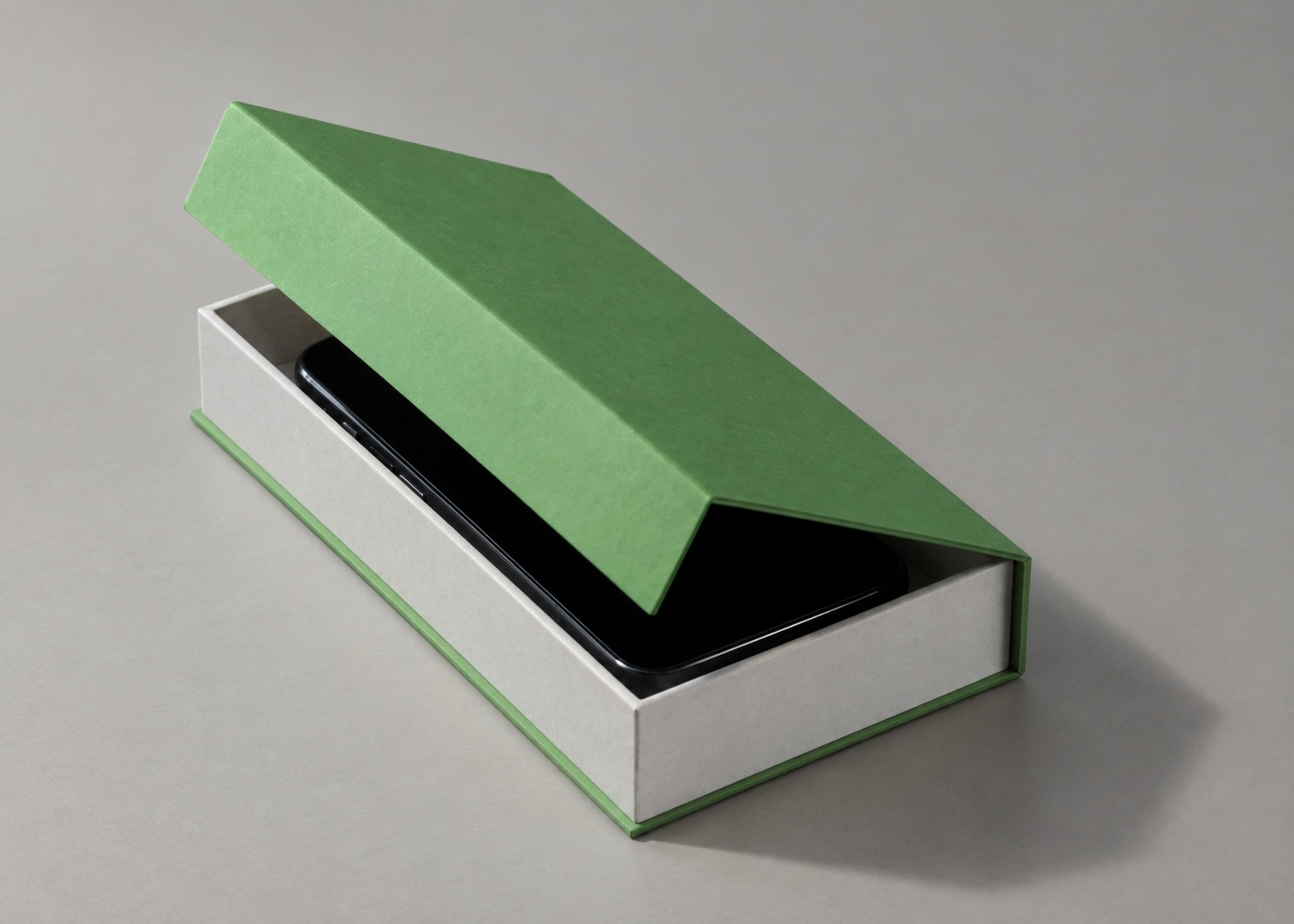
A printed rigid outer that opens book-style with a magnetic closure, revealing the device held in a fitted tray. It is well made, and the opening is a genuine moment.
Job two is what you are paying for. The book-style opening and fitted tray do real work at the door: they close the trust gap before the customer has touched the phone. Outside, though, it has the same problem as the two-piece. The shape reads as a phone box, so the discretion half goes unanswered.
Job one is severe. The tray is cut to fit one device exactly. Every model needs its own, no tolerance, no universal option. It is also the most expensive format here, almost exclusively China-sourced, with long lead times.
Job three. The trust moment is there, and in principle the box could come back. In practice, the tray is the problem. It is cut for one specific model, and the device going back is rarely that model. Either it does not fit, or it sits loose and moves in transit. A tray sized to a single device works in one direction only.
On compliance. Printed rigid board, magnetic strip, moulded tray, often coated or laminated. Multi-material throughout, none of it separating cleanly. One of the hardest formats here to classify and prove recyclable. Imported from outside the EU, so the compliance file is yours to carry.
Strong brand experience and real protection outbound. Also the most expensive, the least compliant, and the most complex to run. Viable for premium operators at low SKU counts willing to take the risk.
Reusable textile box
KIUD
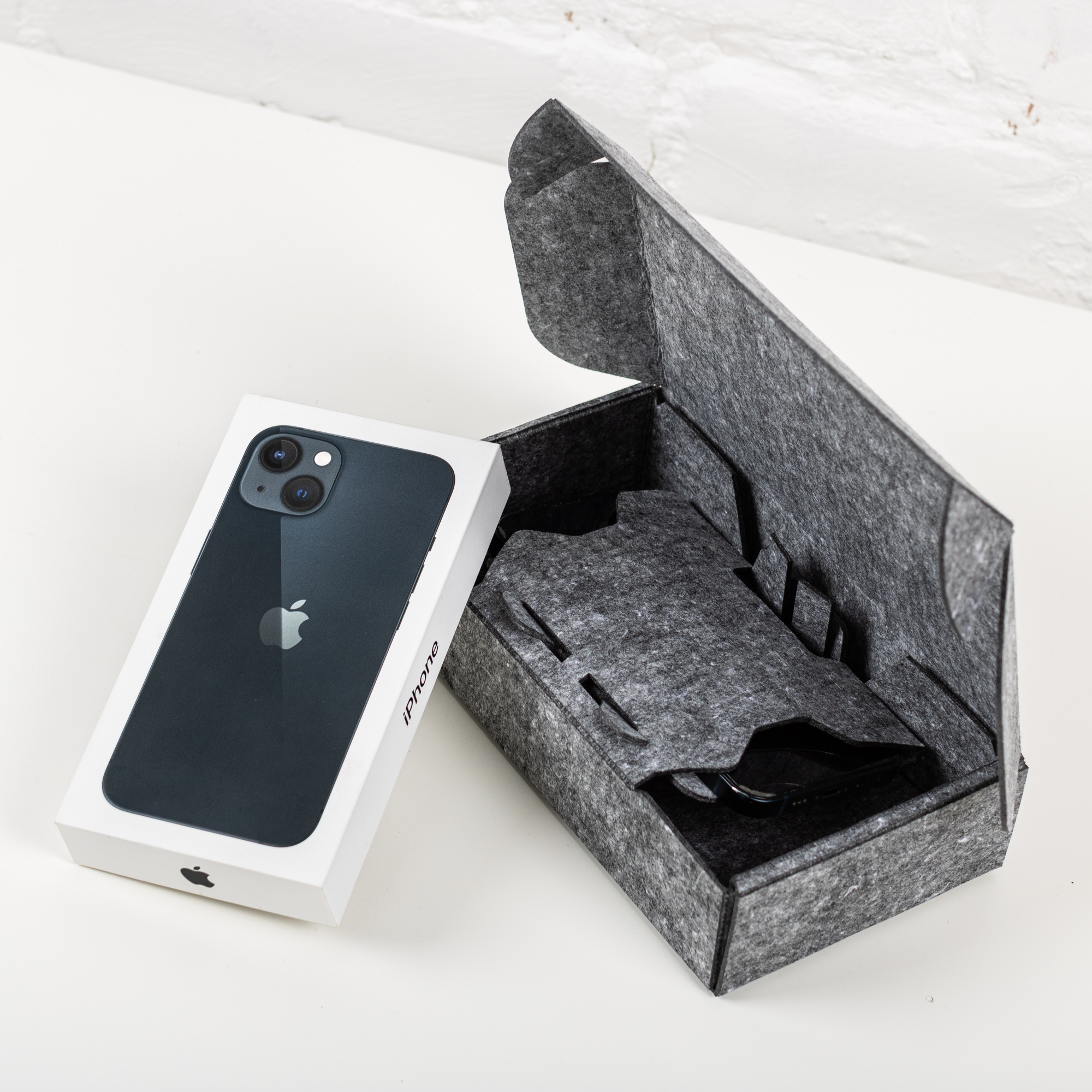
A standard box format, made from textile waste and built to be used again. Tear-resistant, splash-proof, labels stick and peel cleanly. It is a genuinely good piece of engineering, and it looks different from everything else in a warehouse, which matters more than it sounds.
It is a general-purpose format, though, not a phone one. It can be used for electronics, but it wasn’t designed around them.
Job two is a fair result. The textile surface is genuinely distinctive, and nothing about it suggests electronics, so discretion holds.
Job one needs help. A standard box shape holds nothing in place, so carrying a phone means adding an insert to stop it moving in transit. That is a second component to buy, stock and pick, and it undoes the simplicity the single-piece box otherwise offers.
Job three is the one it is built for, with a condition in the name of their own product line: closed-loop. The smartphone application is buy-back and Device-as-a-Service, where the box travels between a customer and an operator who both have a reason to return it. In that environment, the maths works, because the box comes back.
On compliance. Built from textile waste, so the material story is good. Reuse also sits well under PPWR, which treats packaging already in circulation more kindly than single-use.
Consumer sales are a different environment. On our own sourcing, a reusable textile box costs several times more than a single-use one, and that capital sits in inventory instead of working. For a business on refurbished margins, sending a box of that value out with every order and hoping most come back is not a packaging decision. It’s a bet on consumer behaviour.
Promising material, well made, and the right answer for closed-loop B2B flows where return is near certain. Too expensive for outbound sales in a low-margin category, and it still needs an insert to carry a phone.
The box outside the box
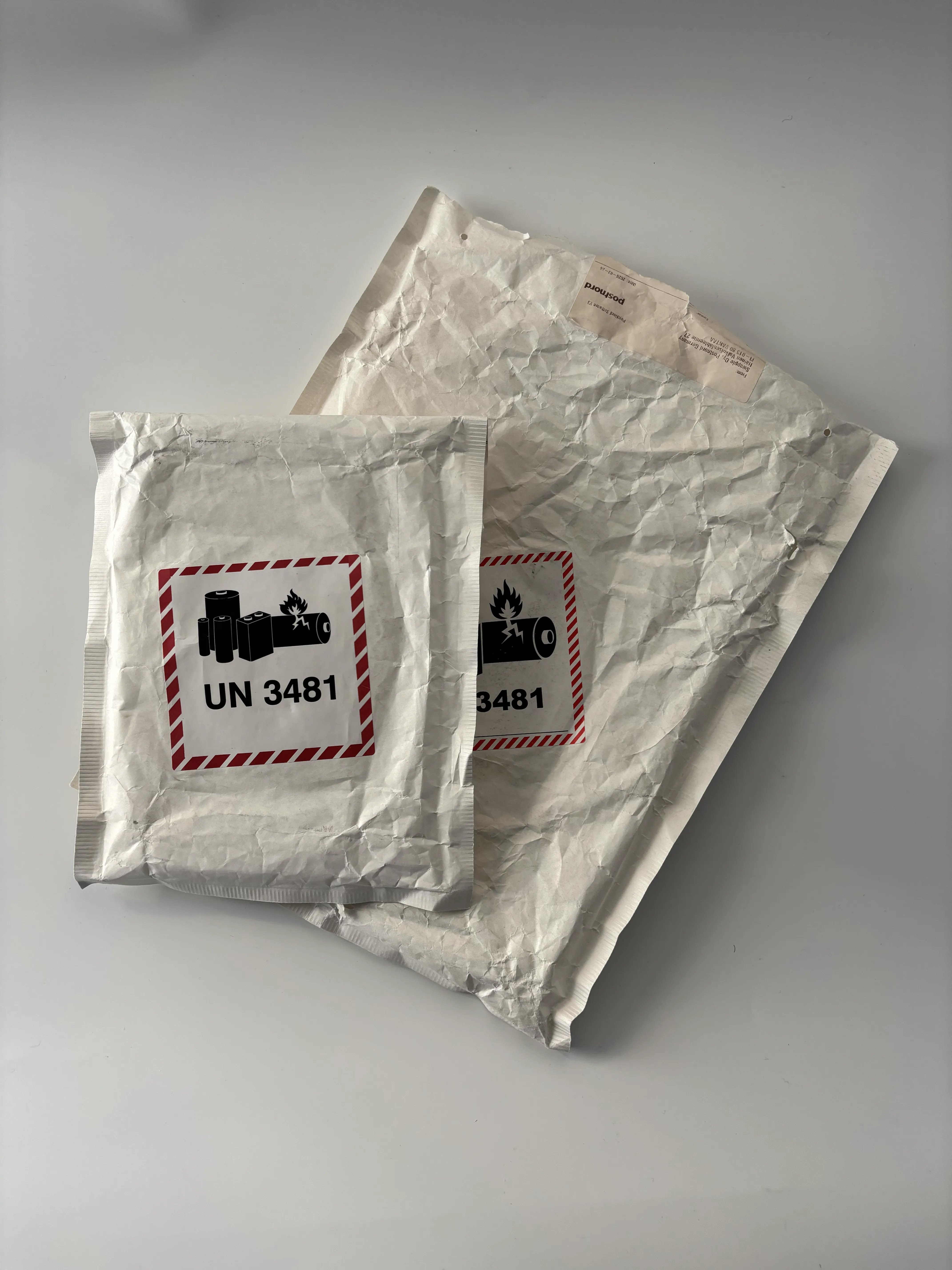
Several of the formats above cannot be shipped on their own. The two-piece rigid box and the magnetic lid box both need an outer mailer or shipper to survive the postal network and to carry the label.
The printed corrugated mailer box can ship on its own, but only if you give something up. Print the brand across it, and it ships fine, and it also tells everyone handling it exactly what is inside. Put it in an outer to stay discreet, and you are back to two boxes.
Either way, it’s a second material, a second supplier, a second line on the invoice, and a second step on the packing floor. It rarely shows up in the unit cost comparison, and it should.
Three options, none free. A plastic padded mailer is cheapest and the hardest to justify in 2027. A paper padded mailer solves the material question and costs more. An envelope is the cheapest of the three, but it only works if what’s inside can handle the journey on its own.
The exception is a format built to ship as it is: strong enough to take the journey unprotected, with a surface the label goes straight onto, and discreet enough not to need hiding. Then the second box is a choice, not a requirement. Useful when accessories ship with the device, unnecessary when they don’t.
And whichever format you land on, it has to meet the applicable PPWR requirements. We have written about what that means for refurbished tech operators separately.
RePack Vie
Format 06 // 06 · Made in the EU
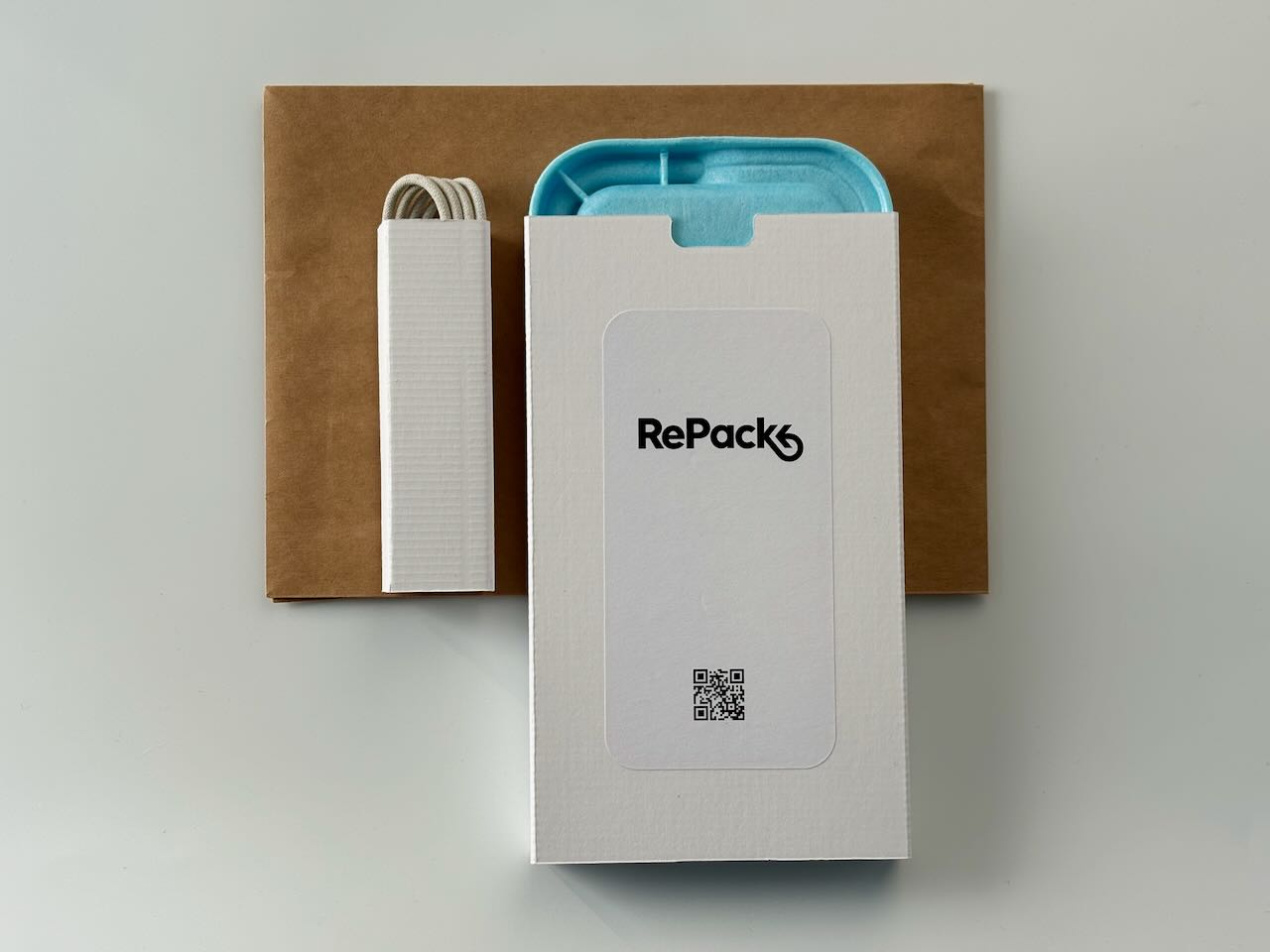
Two pieces. A moulded paper pulp tray and an outer sleeve or box.
Job one: fast, foolproof packing. The tray is designed with tolerance rather than cut to a single device, so one tray takes any smartphone from the smallest current model to the largest. The outer then closes over it and holds everything in place, so the device doesn’t move in transit. One SKU on the shelf, one reorder line, no model lookup, no pick decision. Place the device, close the outer, done.
Job two: signal quality to the customer, signal nothing in transit. The outer is printable across a full colour range, and the inner trays come in brand colours. The format is a flat rectangle under 30mm. It reads as a document, not as a phone. Nothing about the shape tells a courier what is inside, and nothing rattles to tell them either.
Job three, earn the return. The same tolerance that lets one tray take any device outbound lets it take a different device inbound. The customer's old phone fits the tray it arrived in, whatever model it is. The box that delivered the purchase is the box that collects the trade-in, already in their hands, already sized, nothing to find or fold.
The QR layer. Every Vie carries a QR code, which turns the box into the start of a journey rather than the end of one. Point it at a personalised landing page, and the customer gets setup guidance, warranty registration, and their trade-in quote without a single printed insert. The paperwork that usually rides along inside the box goes away, which removes a pick step, a material, and a cost. More usefully, it means the trade-in ask arrives at the exact moment the customer is holding the box it would go back in. You control what sits behind the code, and you can change it without reprinting anything.
The economics are built on the outbound journey. The unit is priced to work as a delivery box on its own, so a return is upside, not a requirement. Nothing depends on consumer behaviour you can’t control.
One box. Out with a phone. Back with a trade-in. That is the whole idea.
Everything, side by side
Scroll sideways on a narrow screen.
| Format | Packing | Brand presence | Discreet | Ships alone | Return |
|---|---|---|---|---|---|
| Corrugated mailer box, with pocketPakThat, ColomPac | One size, device held | Plain brown | Yes | Usually | No |
| Corrugated mailer box, printed, no pocket | One size, device unheld | Printed on brown board | Yes | Yes, but not discreetly | No |
| Retention packagingKorrvu, ColomPac FT 140 | One frame, device held | Industrial | Yes | Usually | No |
| Two-piece rigid box | Insert per model | Strong reveal | No | No | No |
| Magnetic lid box | Insert per model | Strongest reveal | No | No | One model only |
| Reusable textile boxKIUD | One size, needs an insert | Distinctive material | Yes | Yes | Closed loop only |
| RePack Vie | One tray, any device | Full colour, plus QR layer | Yes | Yes | Yes |
The return column is almost entirely empty. That is the blind spot.
Ten seconds settles it
Everything above can be argued on paper. Whether one tray really takes any phone cannot. That takes about ten seconds with the thing in your hands.
Request a sample kitVie, Haku and Kippo are manufactured in the EU by RePack. Explore the full range
Source: CCS Insight, Mobile Device Circular Economy: Health Check and 2025 Outlook.